Black and white wedding photography has a way of making us feel a photograph before we begin analysing what is happening within it. Without colour, our attention changes. We notice the light falling across a face, a hand being held, the shape of a dress moving through the air, a father’s expression, the architecture surrounding a couple, or the split-second reaction of someone who has forgotten that a camera is there.
Colour describes a scene beautifully. Black and white can sometimes reveal something underneath it.
For us, black and white wedding photography isn’t simply a colour photograph with the saturation removed. It is another way of seeing a moment. Sometimes we recognise the potential for monochrome while taking the photograph; other times, it becomes apparent when we begin editing the wedding.
The important part is knowing why a photograph should be black and white.
Not every image is stronger without colour. But when light, composition and emotion come together in the right way, removing colour can transform a photograph into something simpler, more powerful and, occasionally, unforgettable.
Why Black and White Wedding Photography Feels So Timeless
Black and white photography has played a defining role throughout the history of the medium, from early photographic processes to some of the world’s most recognisable documentary images.
One of the most beautiful qualities of black and white photography is its ability to separate an image from a particular era.
Wedding colours change. Flowers change. Fashion changes. Interior design changes. Even the way photographs themselves are edited follows trends.
Black and white photography strips much of that information away.
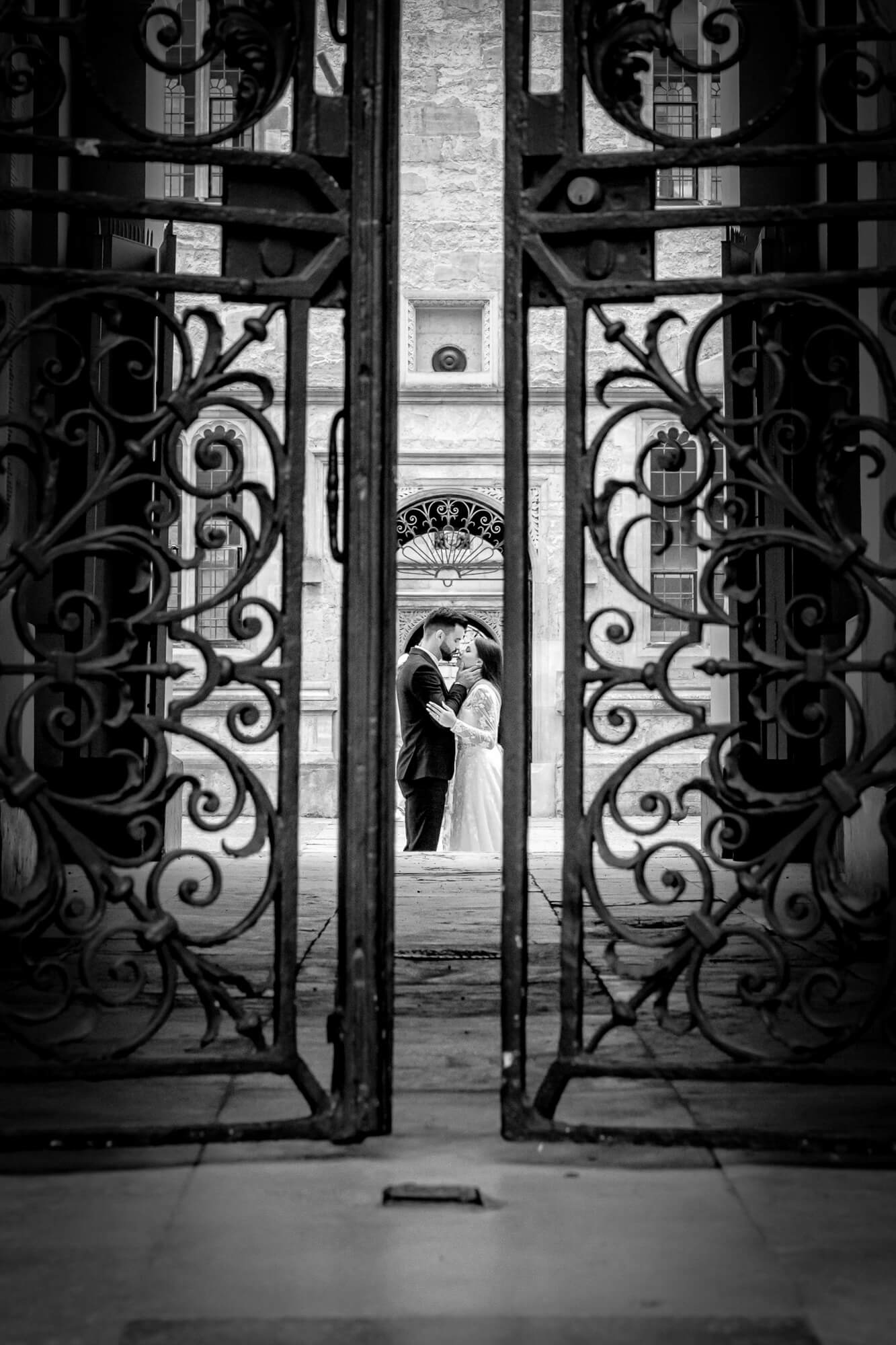
What remains is light, expression, texture, shape and human connection.
Perhaps that is why we instinctively associate monochrome photography with memory. We have seen generations of family history recorded this way: photographs of grandparents, parents, childhood and people who may no longer be with us.
A beautifully made black and white wedding photograph can belong to today while somehow already feeling like part of a family’s history.
And that matters to us.
Wedding photography should look beautiful now, but these photographs are ultimately being created for a much longer life than Instagram.
One day, somebody who isn’t even born yet may be looking through them.
How Black and White Wedding Photography Makes Emotion Stronger
Colour is incredibly powerful, but it also demands attention.
A bright dress in the background, coloured lighting, flowers, signs, walls and decorations all compete for our eyes. Sometimes those colours are an important part of the story. At other times, they distract from the thing that actually matters.
A face.
A tear.
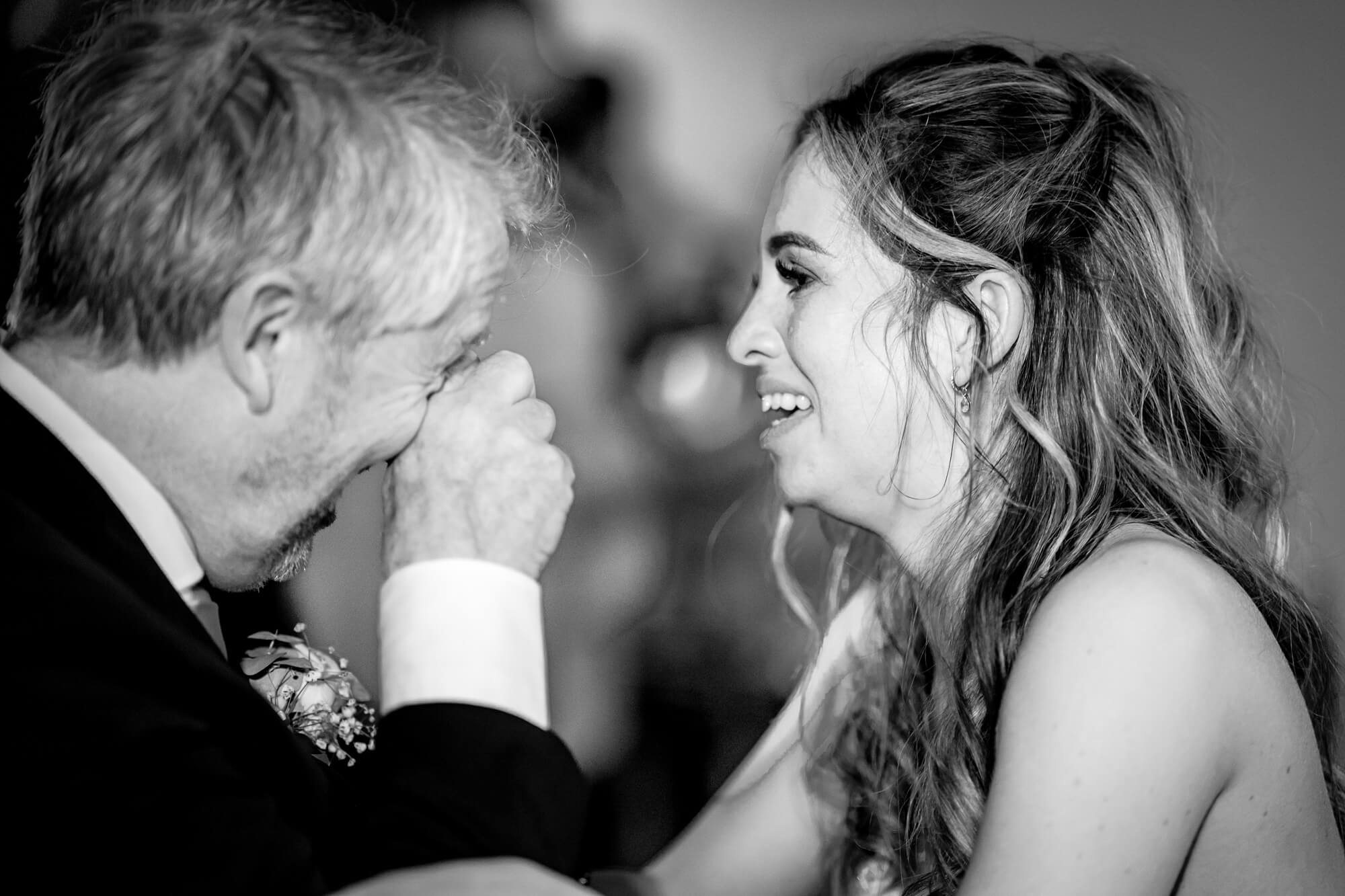
A laugh.
An embrace.
A nervous expression just before the ceremony.
When colour is removed, the viewer’s attention can become much more concentrated.
One of the things we love about documentary wedding photography is that the strongest moments are often incredibly small. They aren’t necessarily the moments that have been planned.
Someone suddenly becomes emotional. Friends collapse into laughter. A child looks across a room. A parent watches from the side. A bride reacts to something happening just outside the frame.
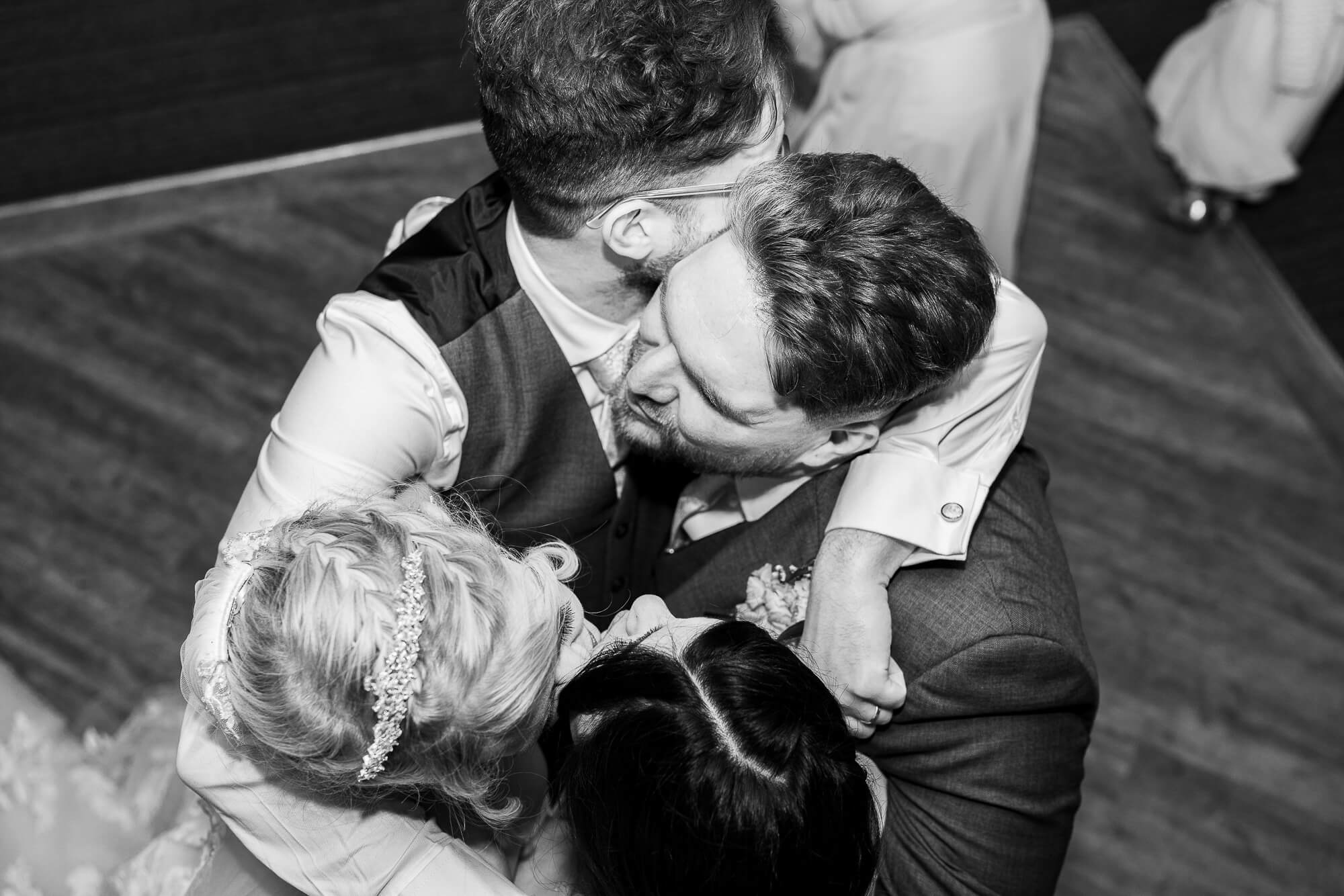
These moments can last for less than a second.
Black and white allows us to remove some of the visual noise surrounding them and say:
This is what mattered here.
The Importance of Light in Black and White Wedding Photography
Look closely at many of the photographs in this collection and something becomes apparent.
They aren’t really photographs without colour.
They are photographs about light.
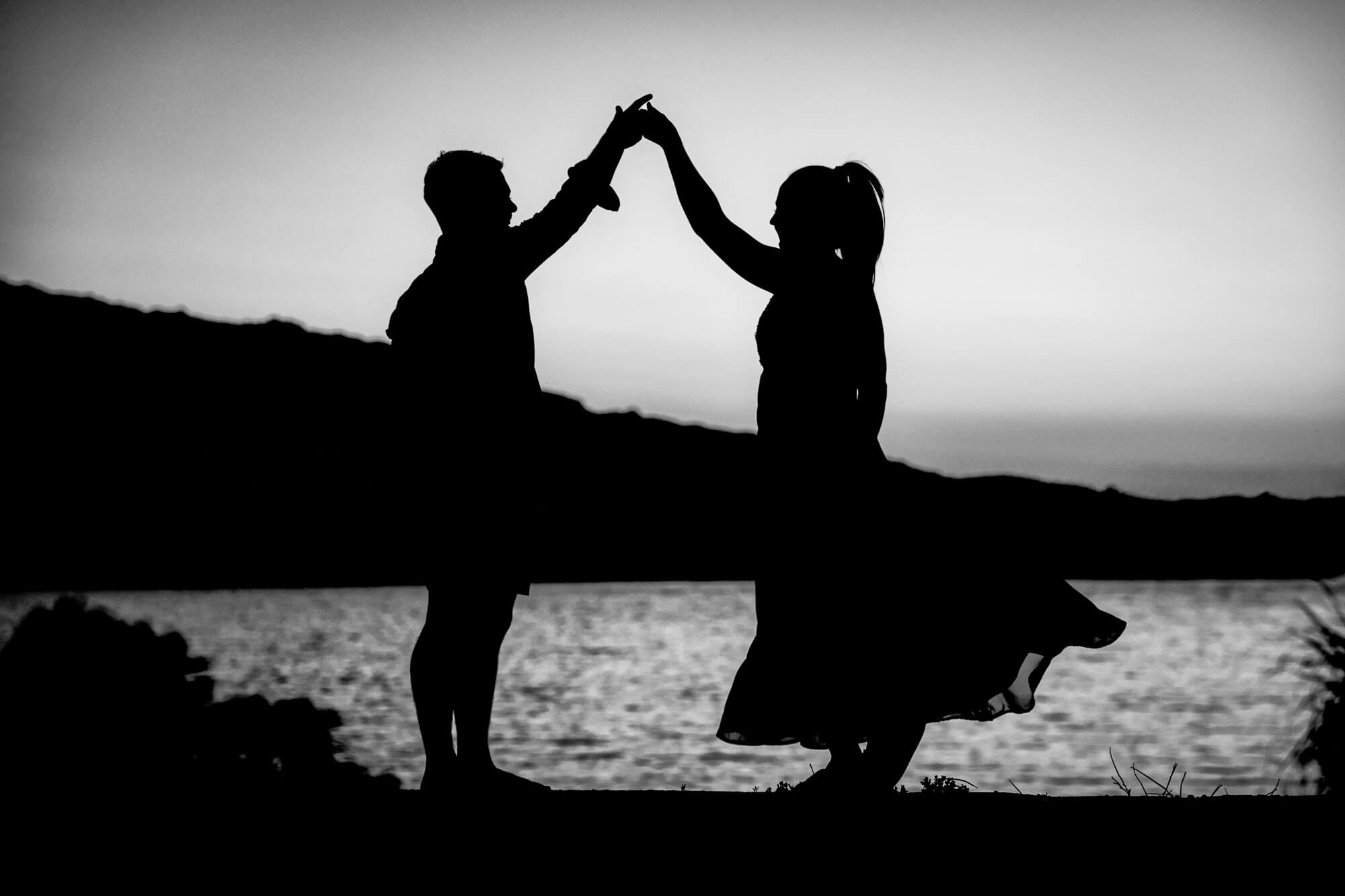
The silhouette of a couple against the sky works because their bodies become graphic shapes.
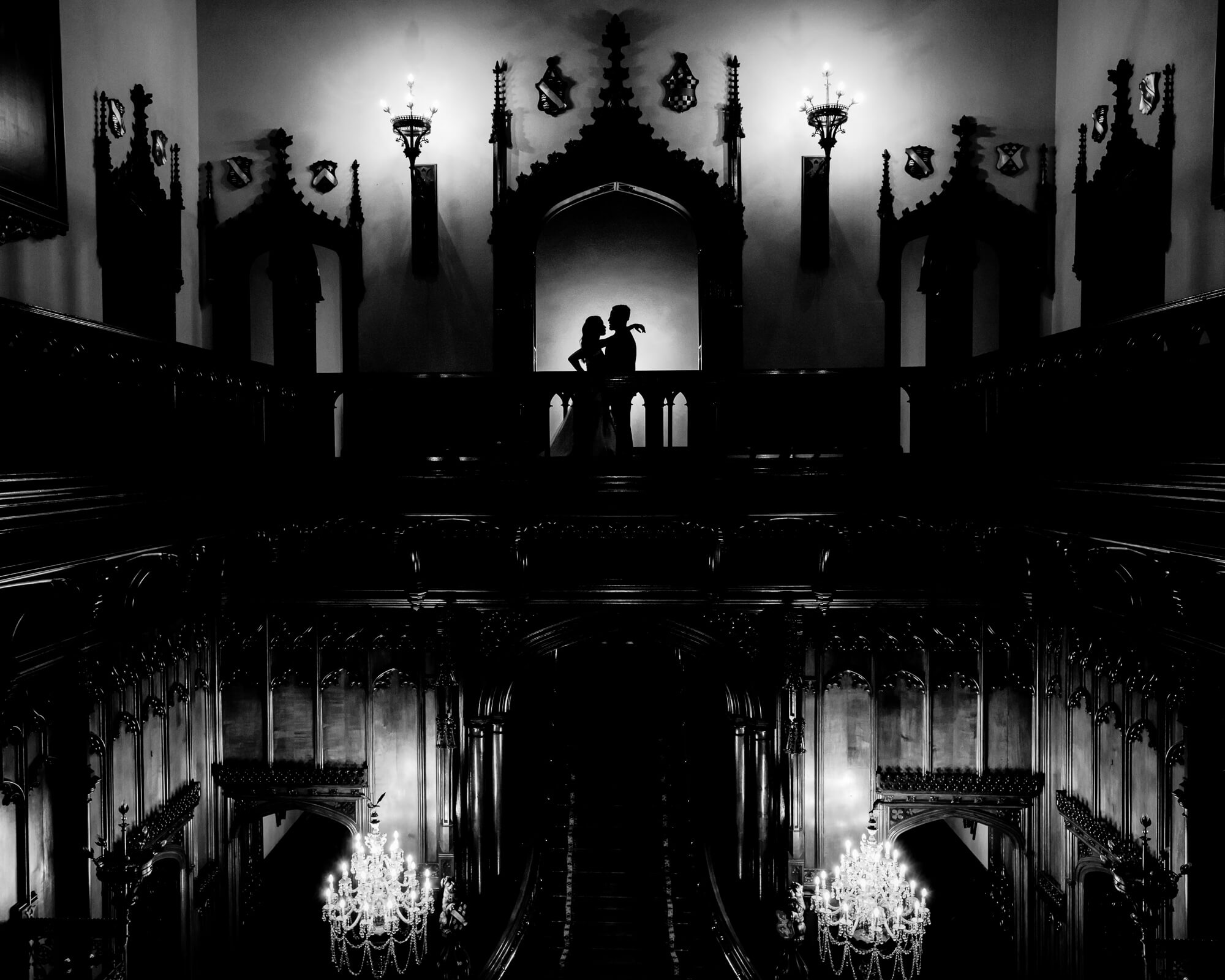
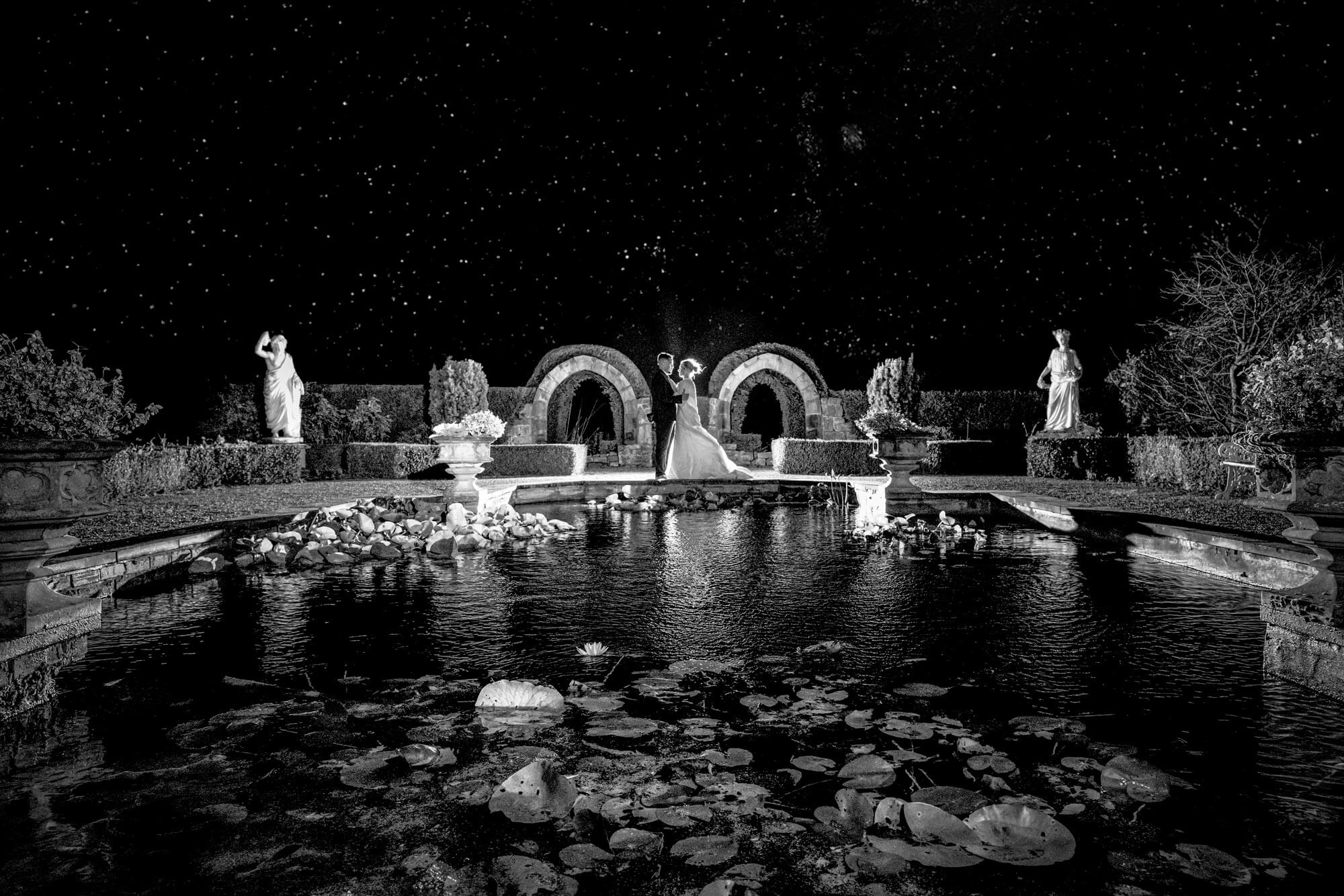
A couple surrounded by dark Gothic architecture works because a small area of illumination separates them from an enormous space.
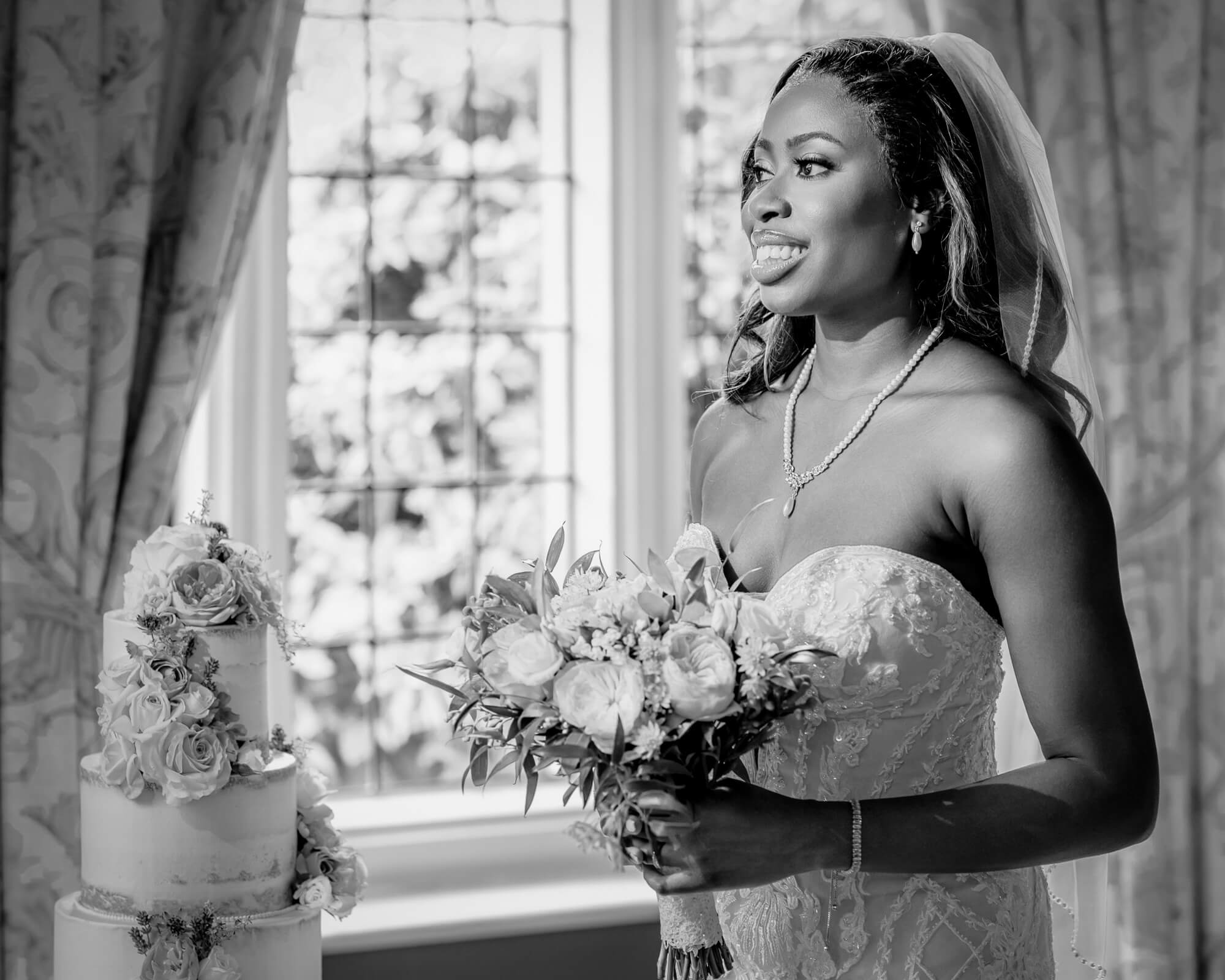
A bride standing in a shaft of window light works because the photograph is built around the transition from darkness to brightness.
The same is true of the bride having her make-up applied. The spray catches the light for a fraction of a second while everything behind her disappears into darkness.
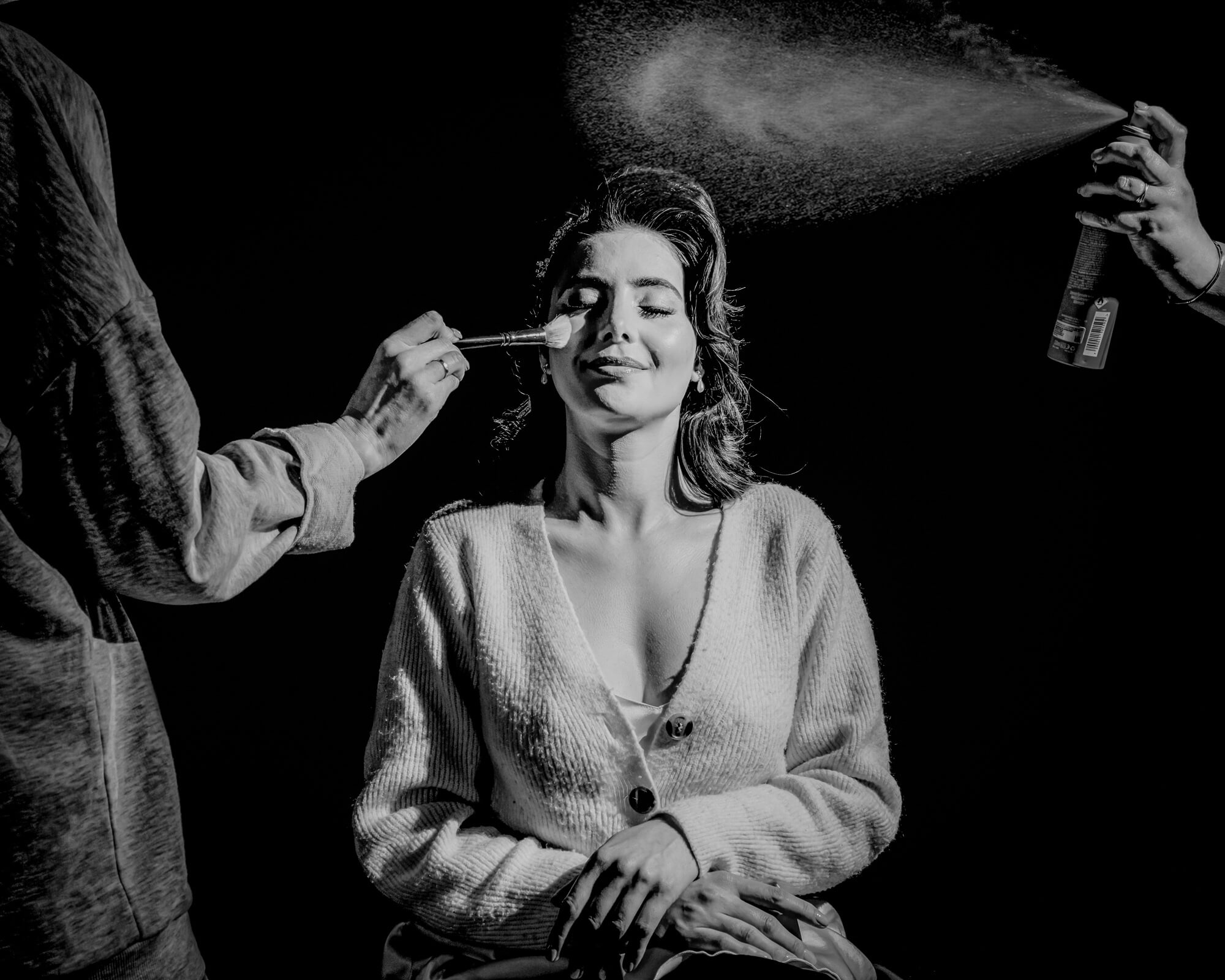
These photographs depend on highlights, shadows, geometry and contrast.
That is one reason successful black and white photography often begins before the editing process.
As photographers, we are constantly looking for light.
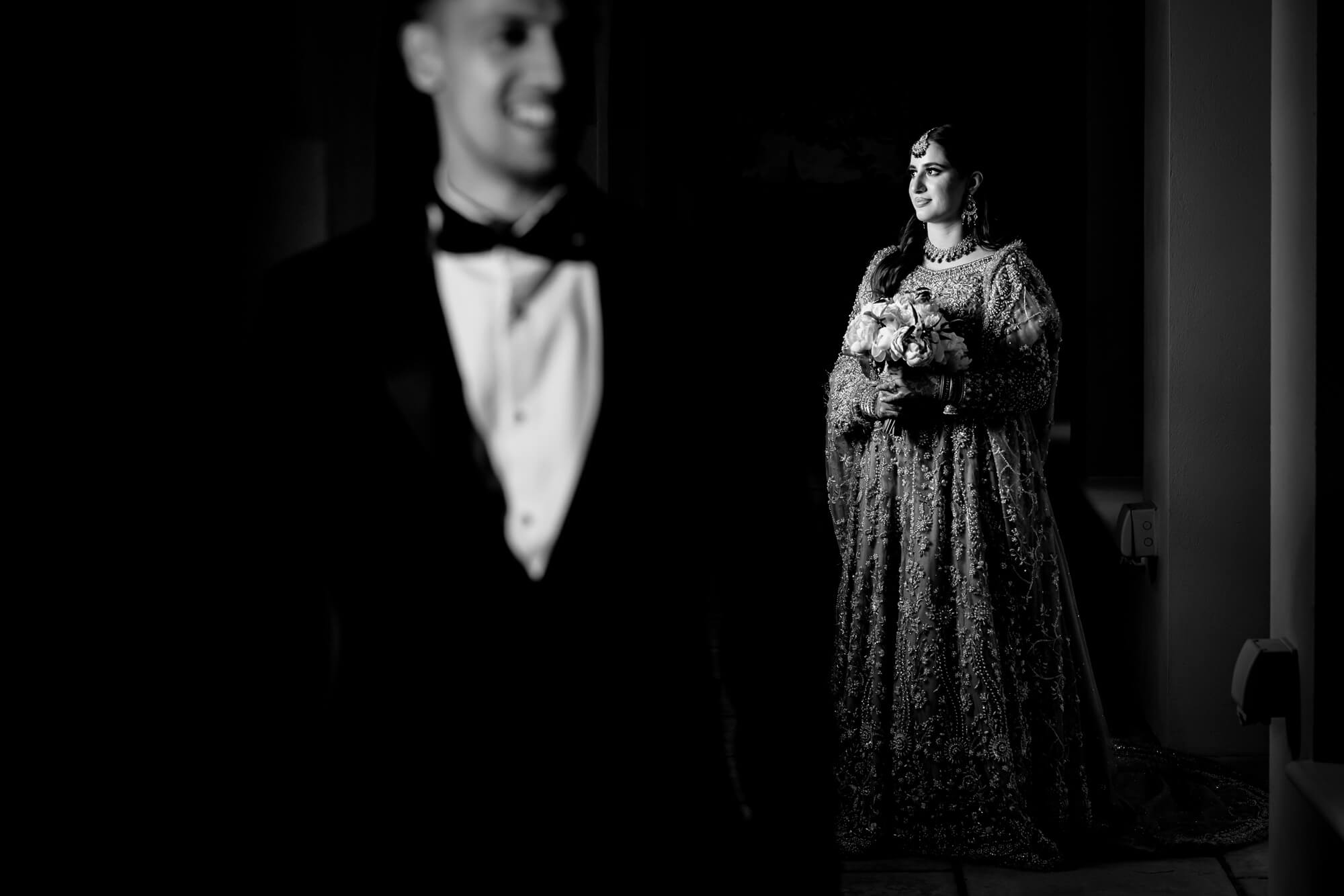
Sometimes the question isn’t simply:
“Where should we put the couple?”
It is:
“What is the light doing here?”
A doorway may create a natural frame. A window can produce a narrow beam across someone’s face. A bright exterior beyond a dark room can turn people into silhouettes. Architectural symmetry can lead your eye towards two tiny figures.
Once you start seeing photographs in terms of light rather than objects, completely ordinary situations can become extraordinary.
Composition in Black and White Wedding Photography
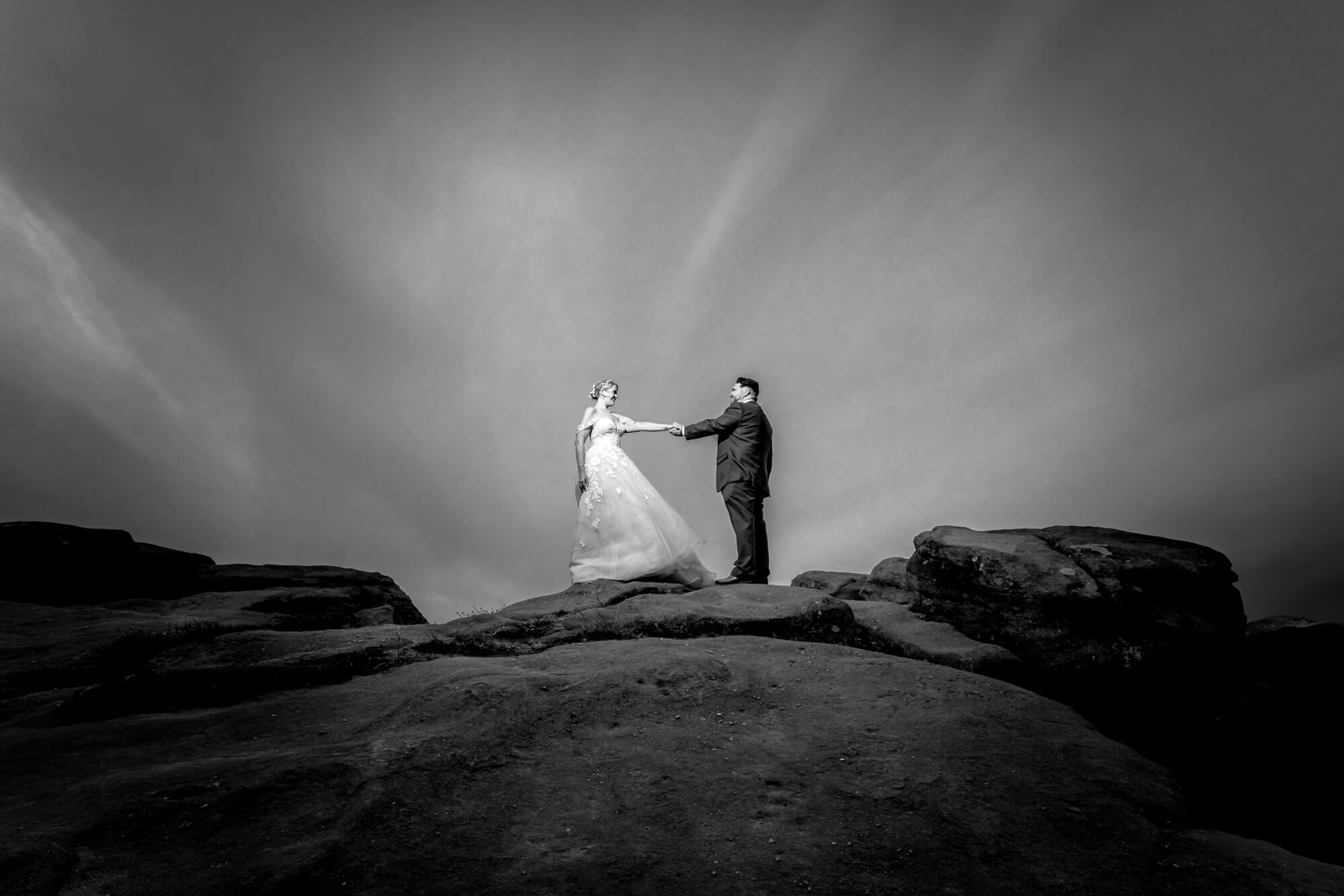
Removing colour also exposes composition.
There is nowhere for a weak photograph to hide.
Lines become more obvious. Shapes become stronger. Negative space becomes important. Repetition and symmetry suddenly demand attention.
That can be seen particularly well in architectural wedding photography.
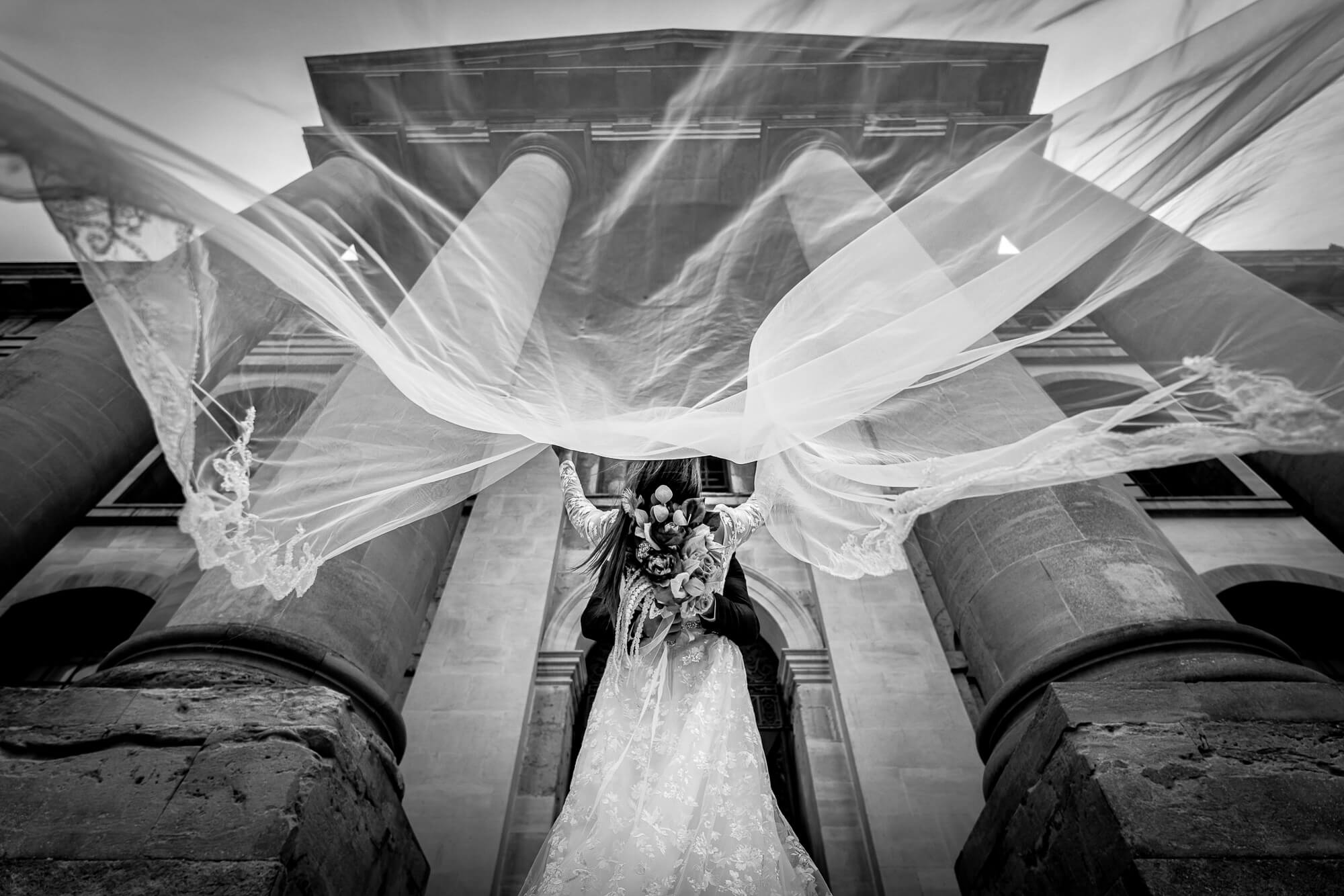
A couple may occupy only a tiny percentage of the frame, yet the architecture around them gives the photograph scale and drama.
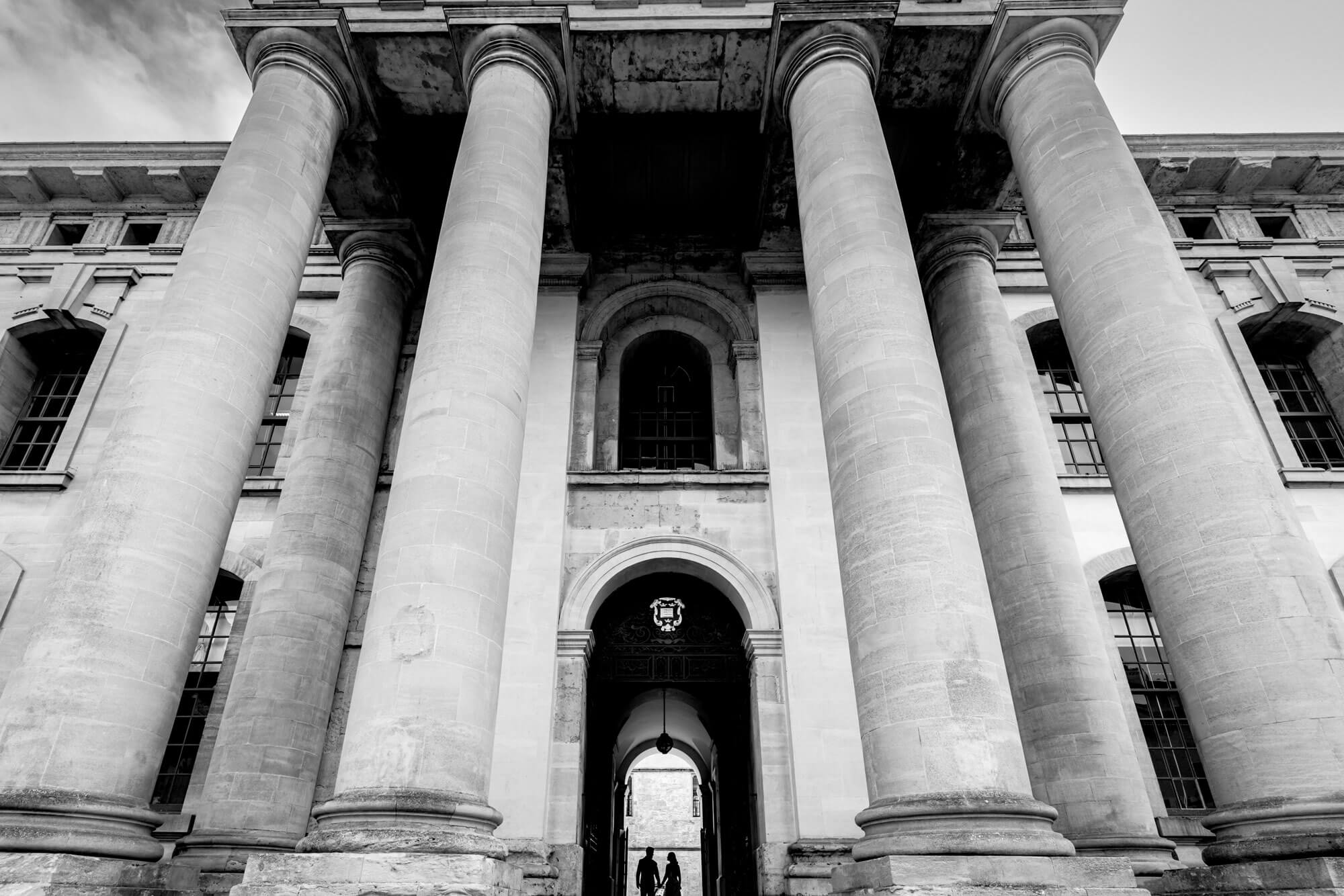
In another image, ornate iron gates create layers around the couple. The viewer’s eye has to travel through the foreground before discovering them.
Elsewhere, a bride and groom stand alone on rocks beneath an enormous sky.
These photographs aren’t necessarily about showing the couple as large as possible.
They’re about showing their place within the scene.
Sometimes making people smaller actually makes the photograph feel bigger.
The Difference Between Taking a Black and White Photograph and Converting One
Technically, most modern wedding photographs are captured in colour RAW files. That gives us the maximum information to work with afterwards.
But mentally, there are photographs we already see in black and white when we press the shutter.
That distinction matters.
If we see a scene dominated by hard light, silhouettes, repeating patterns or strong architecture, colour may already be irrelevant to the photograph.
We’re thinking about luminance rather than hue.
Where are the brightest areas?
Where will the eye travel first?
Will the subjects separate from the background?
What happens if the shadows become almost completely black?
Can the image survive on shape and expression alone?
That is very different from taking an ordinary photograph and later deciding that a monochrome preset looks nice.
For us, black and white is part of the visual storytelling rather than an effect added afterwards.
Editing Black and White Wedding Photographs
Good monochrome editing is not simply dragging the saturation slider to zero.
The original colours still contain valuable information.
A black and white conversion allows different colours to be translated into different levels of brightness. Skin, foliage, sky, clothing and architecture can therefore be controlled independently to help create separation and direct attention.
From there, the photograph is shaped through contrast, exposure, highlights, shadows and local adjustments.
Some photographs need softness and a long tonal range, preserving subtle transitions through the greys.
Others need the opposite.
Deep blacks.
Bright highlights.
Strong contrast.
Very little information in between.
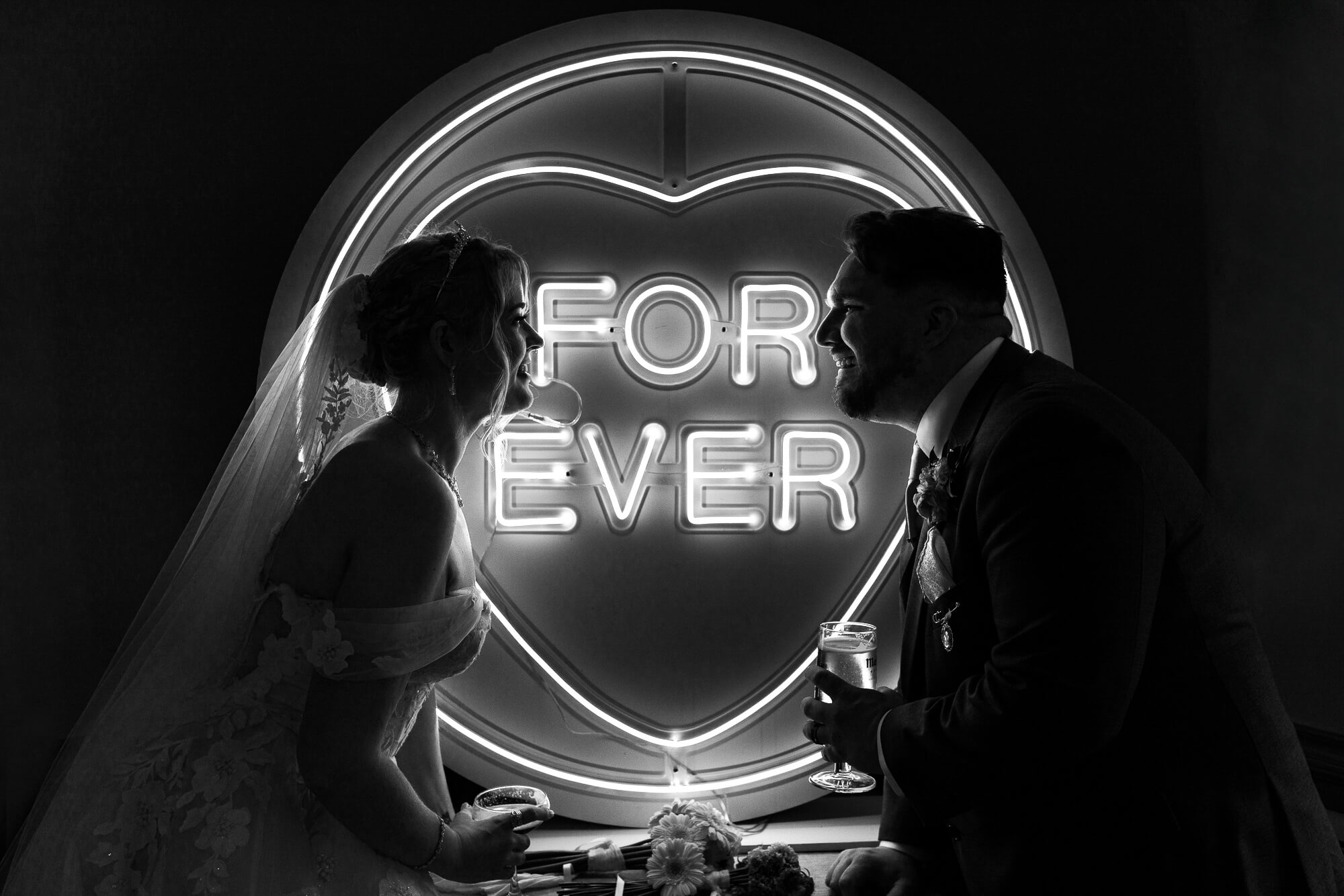
The silhouette photographs in this collection are a good example. Trying to recover every detail from the shadows would actually weaken them. The darkness is intentional. The absence of information is part of the composition.
The viewer doesn’t need to see every detail of a jacket or dress.
The outline tells the story.
By contrast, a bridal portrait benefits from delicate tonal separation in the skin, dress, flowers and veil. Here, crushing the shadows or pushing the contrast too far could destroy exactly what makes the photograph elegant.
So there isn’t one black and white preset that works for everything.
The edit should serve the photograph.
Darkness Isn’t Something We Are Afraid Of
Modern cameras are extraordinarily capable of recovering detail from shadows, but having the ability to reveal something doesn’t mean we always should.
Darkness has a role in photography.
It creates mystery.
It isolates subjects.
It gives highlights somewhere to exist.
And sometimes what you choose not to show is just as important as what you reveal.
Several of these photographs use large areas of almost complete black. Yet your eye immediately knows where to go because a face, silhouette, dress, window or reflection provides just enough information.
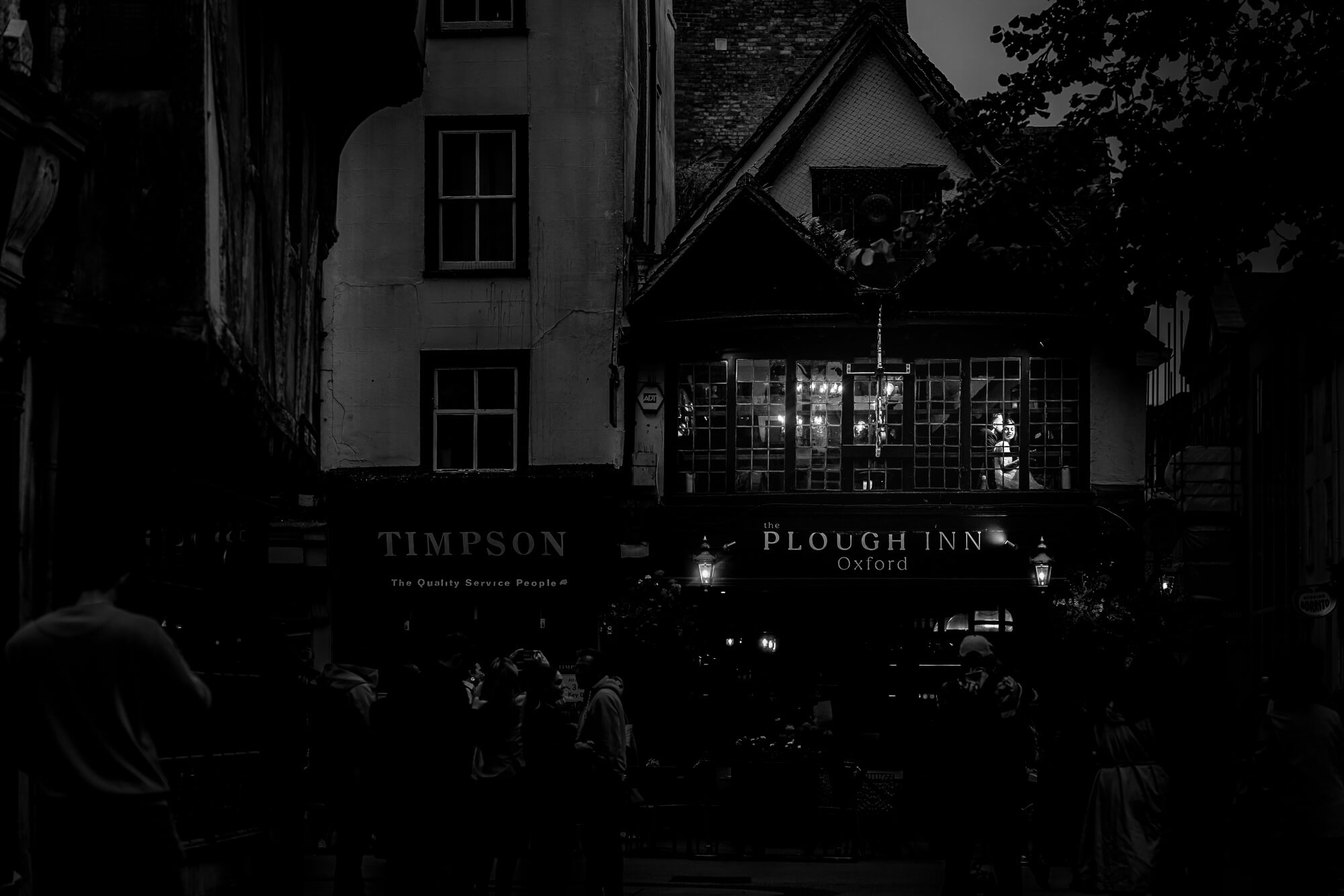
This style can feel cinematic because cinema has always understood the emotional relationship between light and darkness.
A wedding doesn’t have to be photographed as one uniformly bright environment.
Sometimes the darkness is part of the atmosphere.
Black and White Isn’t Only for Serious Moments
There is a misconception that monochrome automatically means romantic, dramatic or melancholic.
It doesn’t.
Some of our favourite black and white wedding photographs are funny.
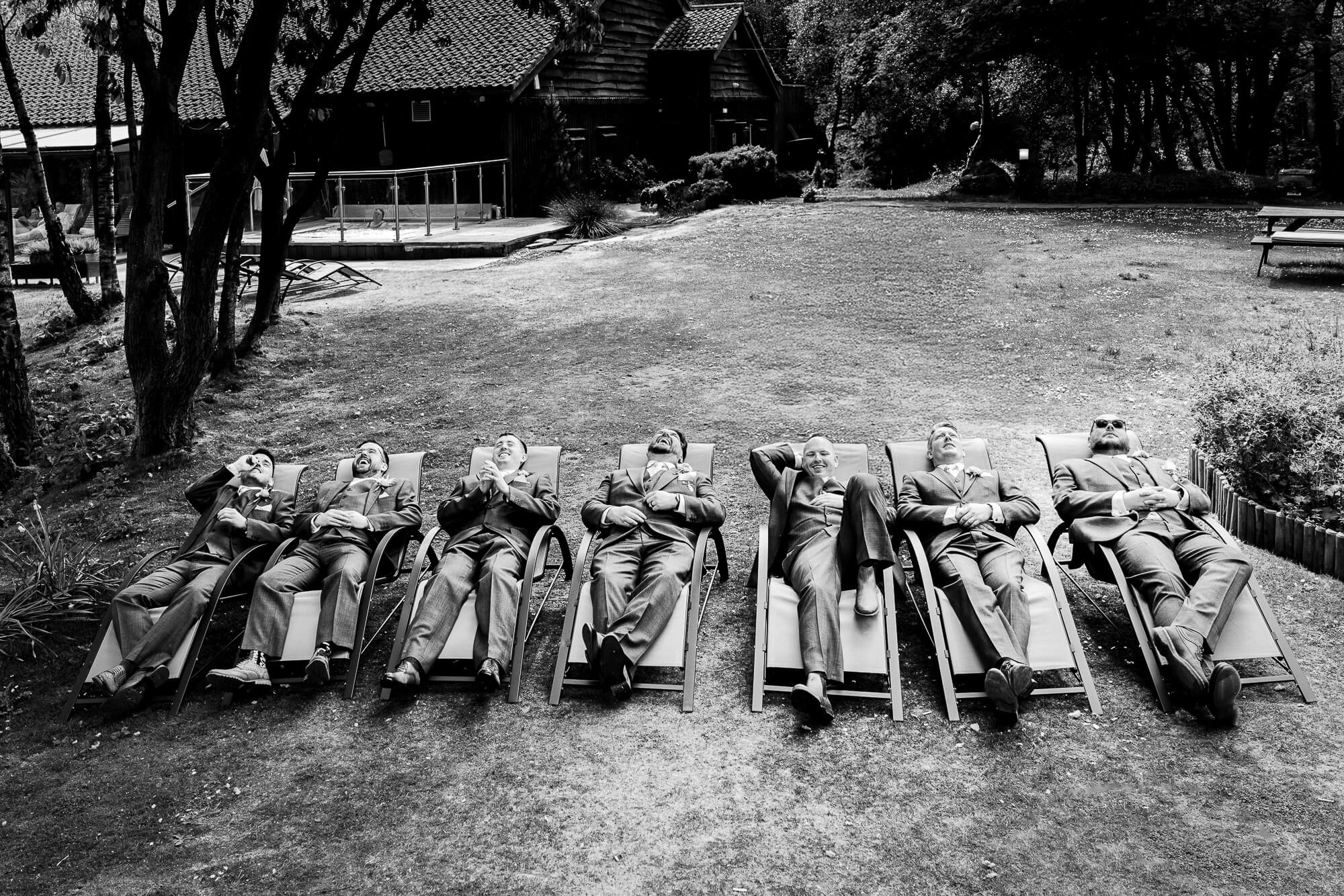
Groomsmen lying back together on sun loungers.
A champagne bottle opening during bridal preparations while everyone reacts at once.
A completely unexpected expression on the dance floor.
A child doing something nobody planned.
These photographs work because black and white can concentrate our attention on gesture, timing and expression.
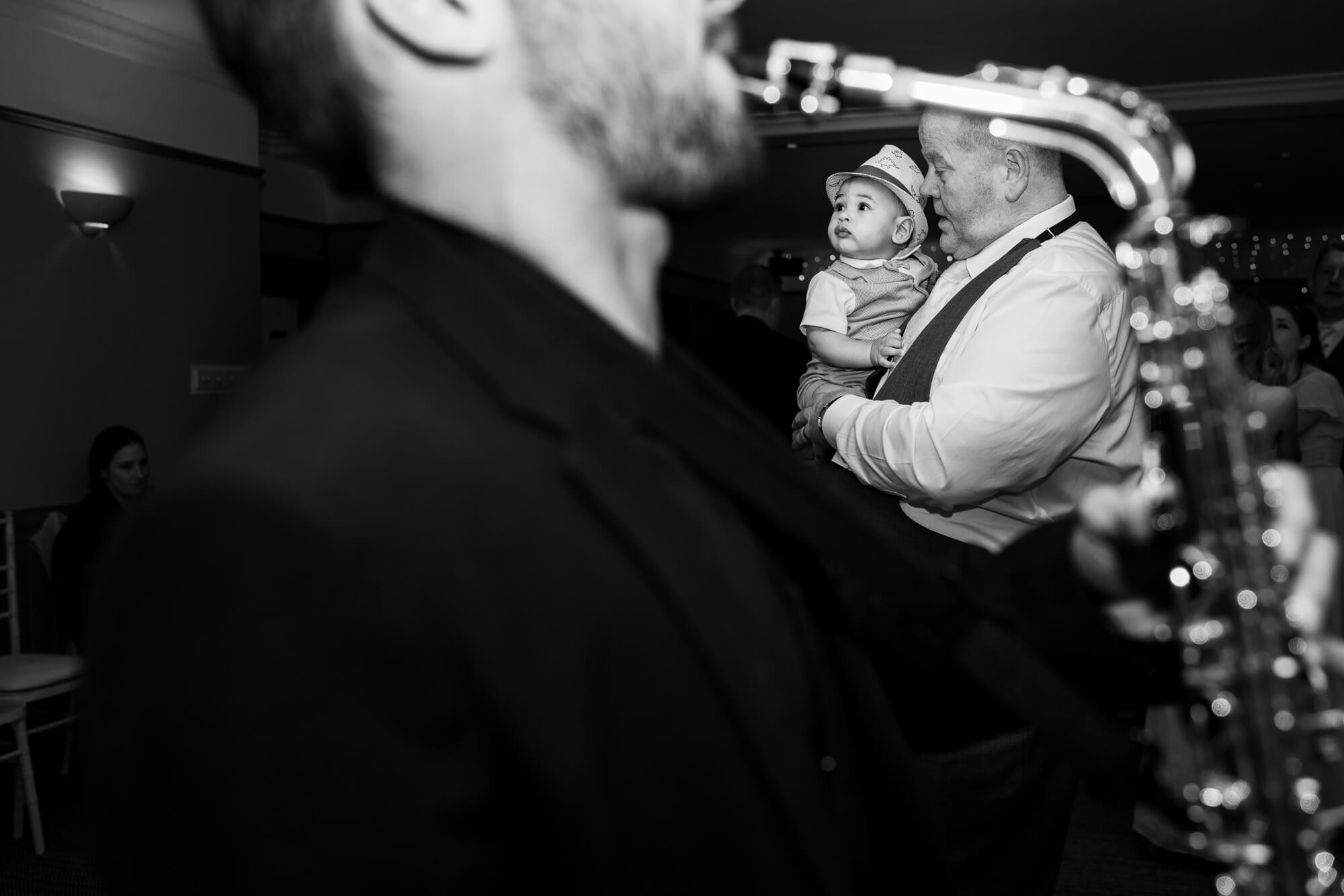
Without colour competing for attention, the humour becomes the subject.
This is where black and white photography connects particularly strongly with our documentary approach.
We’re not trying to make every second of a wedding look perfect.
We’re looking for the moments that make it real.
The Beauty of Imperfect Moments
Wedding photography sometimes becomes obsessed with perfection.
Perfect flowers. Perfect poses. Perfect weather. Perfect backgrounds.
But some of the photographs couples eventually love most aren’t perfect in that sense at all.
Someone is crying.
Someone is laughing with their mouth wide open.
Hair is moving.
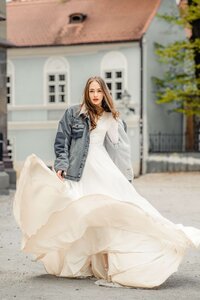
A dress is being thrown around by the wind.
People overlap.
A guest unexpectedly walks into a composition.
Life is happening.
Black and white photography can be particularly powerful here because it removes another layer of polish and brings us closer to the gesture or emotion itself.
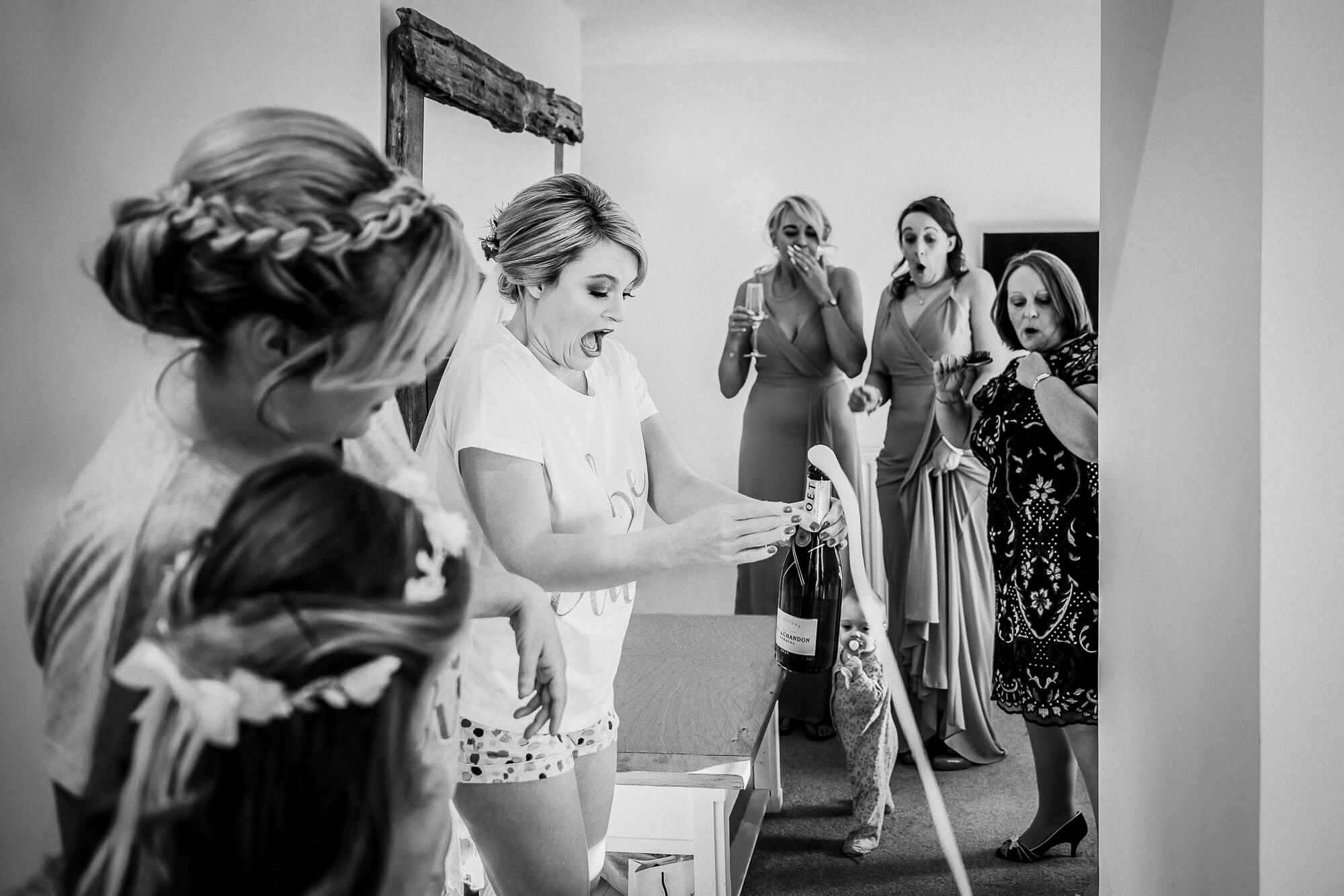
The photograph of an emotional interaction does not need an immaculate background.
It needs honesty.
Twenty years later, nobody will care whether a chair was visible in the corner of the room.
They will care about recognising the person in the photograph and remembering how that moment felt.
From Documentary Moments to Editorial Portraits
Our approach combines documentary and editorial wedding photography, allowing genuine moments and deliberately created portraits to exist within the same wedding story.
There is the documentary side: observing what actually happens without interrupting it.
And there is the editorial side: deliberately using composition, light, movement and environment to create something visually extraordinary.
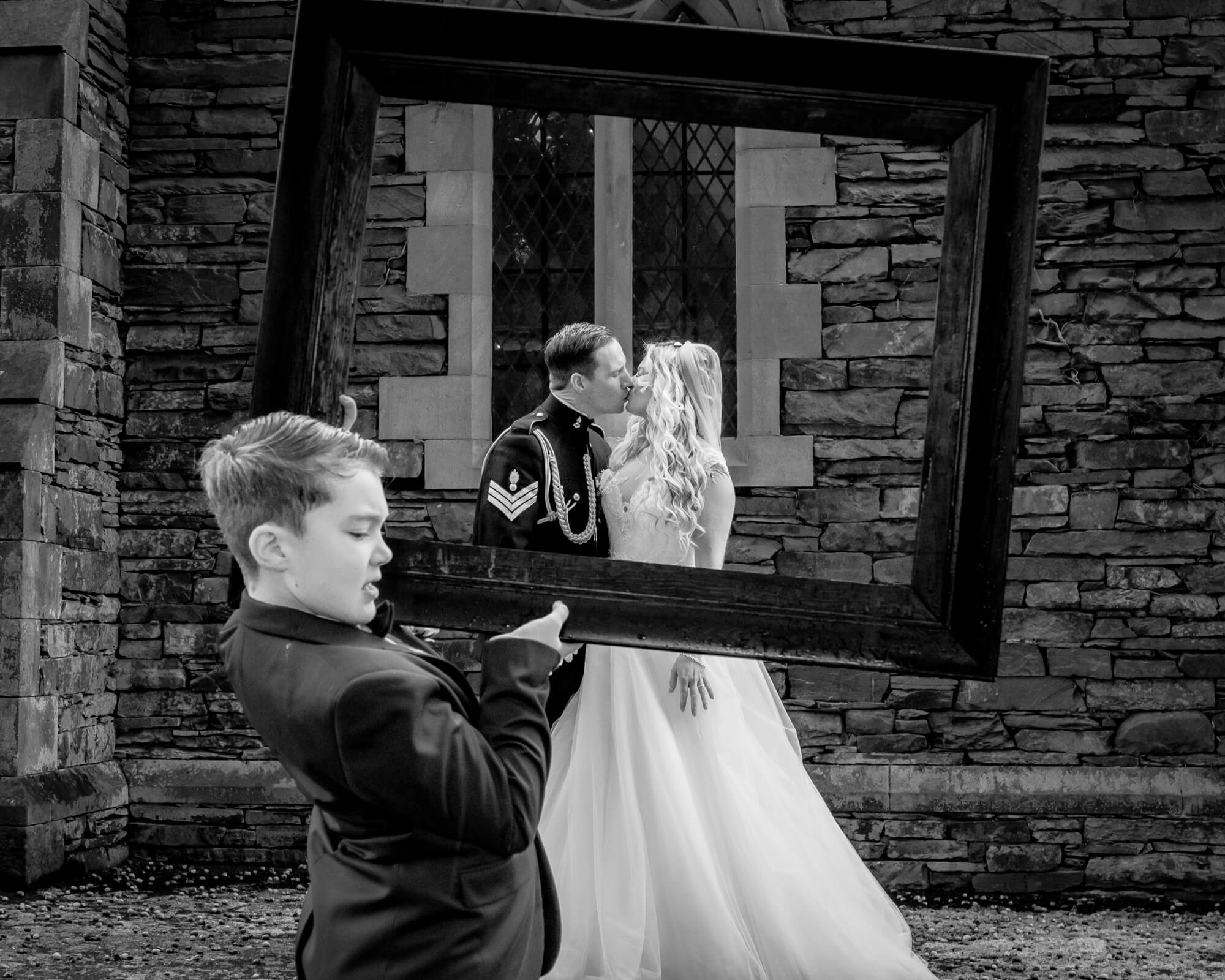
Both can exist within the same wedding gallery.
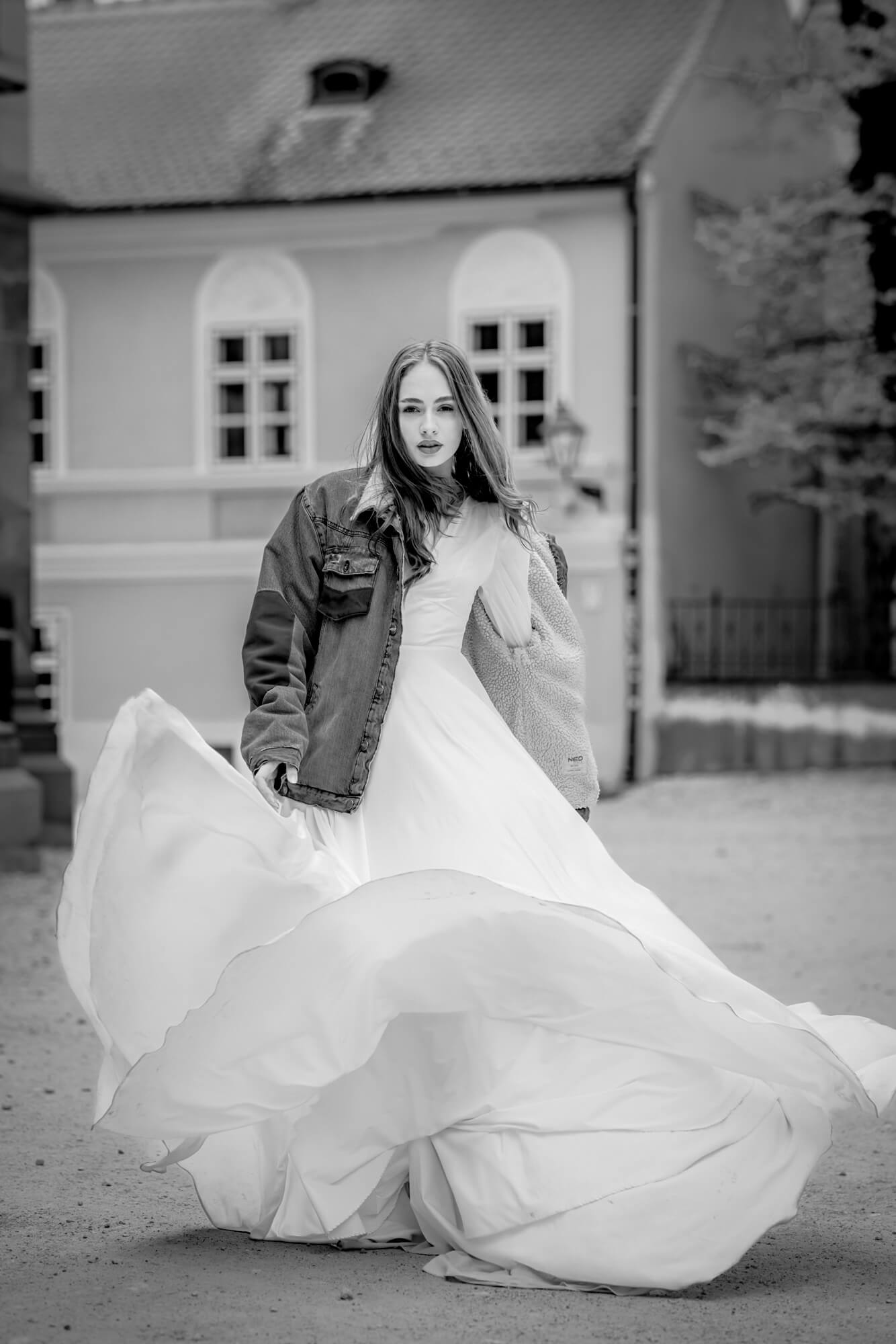
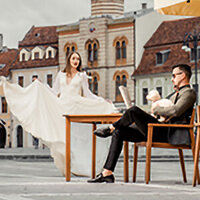
A spontaneous emotional reaction might sit beside a carefully composed portrait beneath dramatic architecture.
A chaotic dance-floor photograph can sit beside an almost minimalist image of two people surrounded by sky.
That contrast is important.
A wedding isn’t one emotion.
It’s nervousness, anticipation, elegance, laughter, chaos, intimacy and celebration — sometimes within a few minutes of each other.
Our photography should be able to move with it.
Some Photographs Need Colour – Others Don’t
We don’t believe an entire wedding has to be black and white.
Colour is part of the story too.
The flowers were chosen for a reason. The bridesmaids’ dresses have a colour. The evening light may be beautiful. The styling and surroundings are part of what the couple created.
Removing colour indiscriminately would mean losing some of that information.
Instead, we choose black and white when we believe it adds something.
Sometimes colour is the story.
Sometimes colour gets in the way of the story.
Knowing the difference is part of the photographer’s job.
Why These Photographs Matter More With Time
There is one final reason we believe black and white wedding photography is important.
Photographs change as we do.
The image that looks beautiful immediately after a wedding can mean something completely different twenty or forty years later.
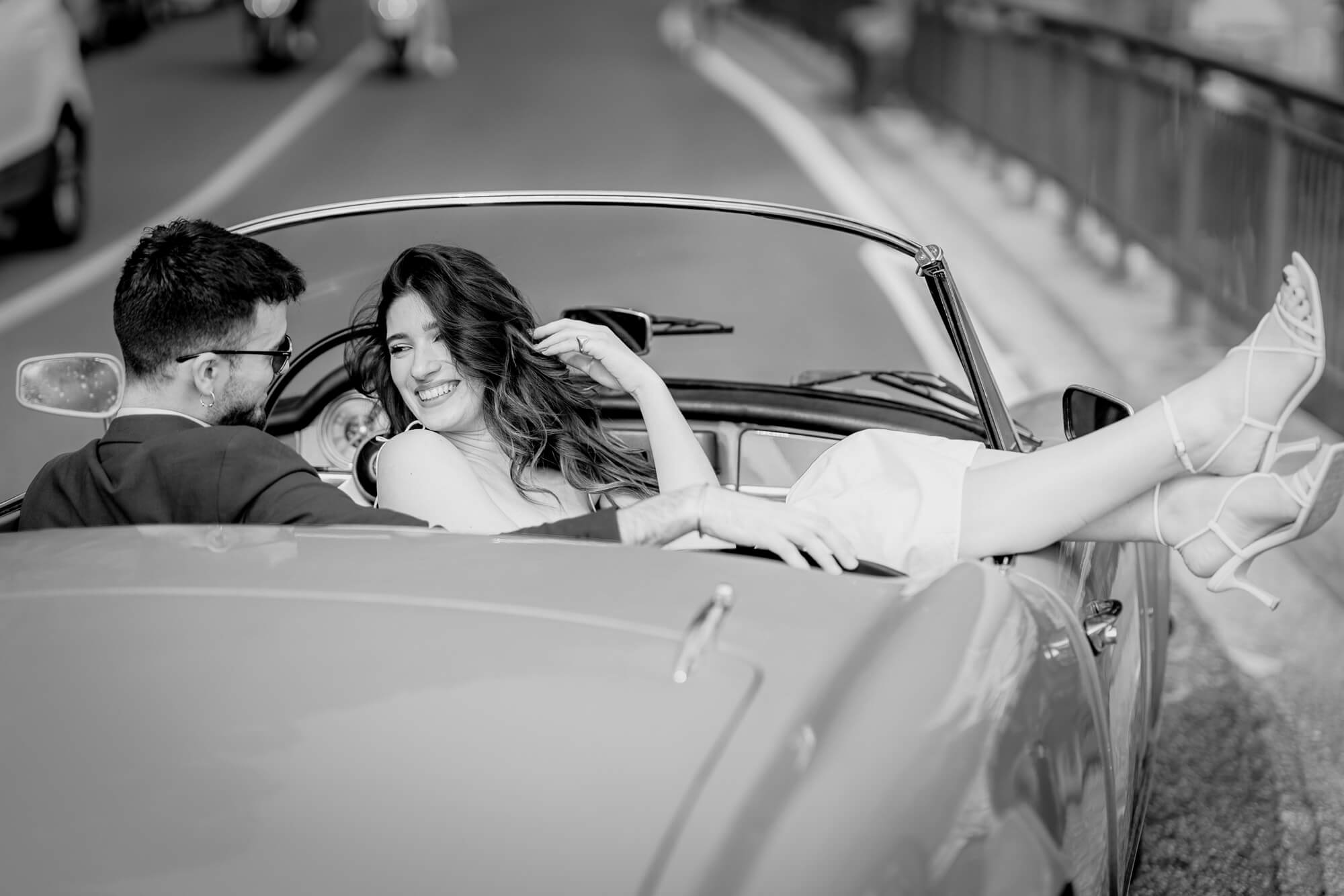
People grow older.
Families change.
Children become adults.
Places disappear.
And ordinary moments become precious simply because they can never happen again.
This is where photography stops being primarily about aesthetics.
It becomes memory.
A photograph of a parent laughing, a grandparent dancing, friends embracing or two people standing together at the beginning of their marriage acquires a value that cannot really be measured when the shutter is first pressed.
Black and white seems uniquely suited to that transition.
It removes some of the visual information belonging to a particular year and leaves behind something simpler:
people, light and emotion.
Black and White Wedding Photography by Calini Weddings
Our approach to wedding photography combines documentary observation with creative, editorial portraiture.
We want to photograph the big moments, but we’re equally interested in everything happening around them: the expressions nobody else notices, the unexpected laughter, dramatic light appearing for a few seconds, movement, architecture and all the little imperfections that make one wedding completely different from another.
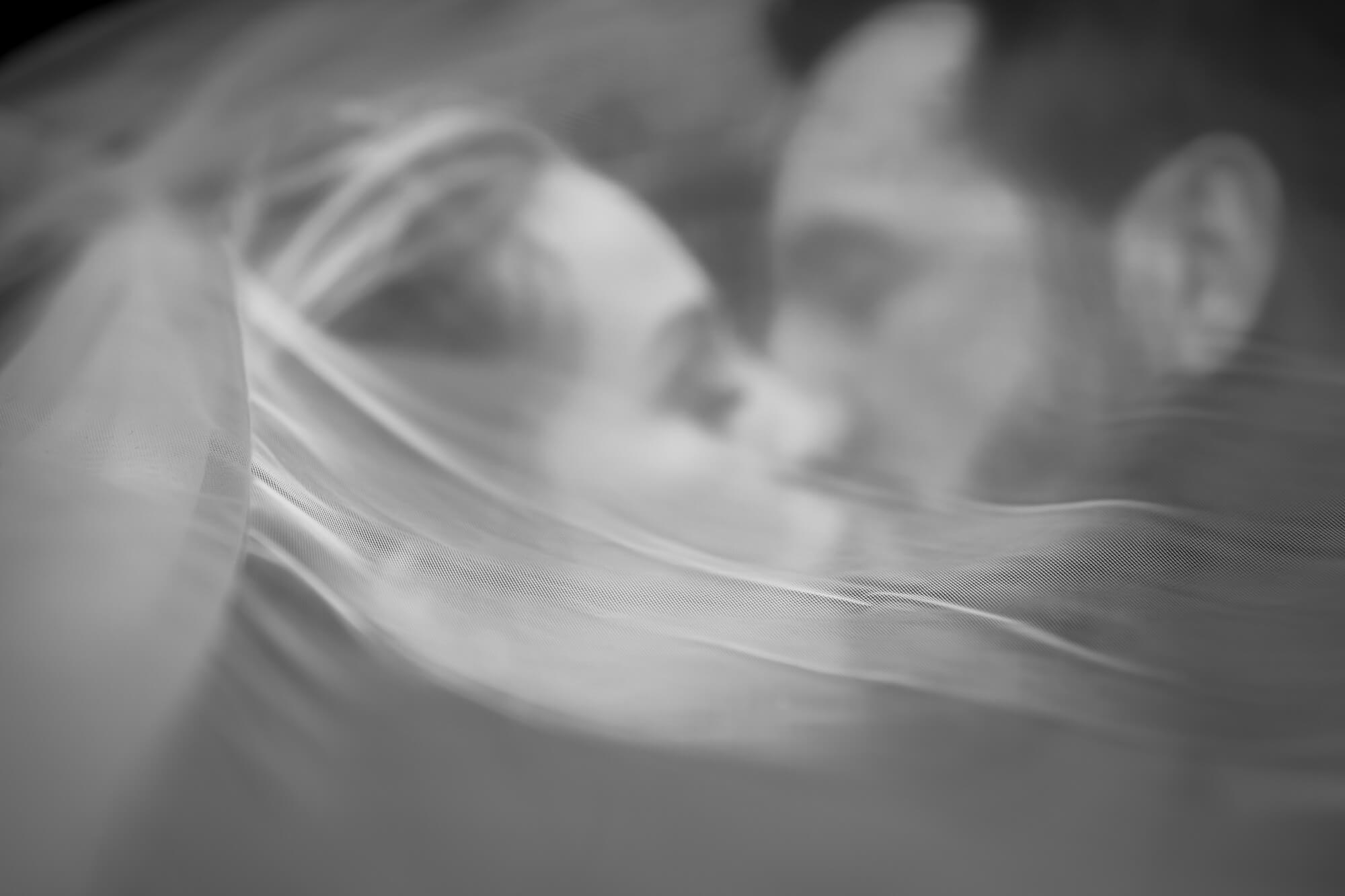
Black and white photography is an important part of that storytelling.
Not because monochrome automatically makes a photograph artistic.
And not because every wedding photograph looks better without colour.
But because sometimes, when colour disappears, everything we wanted you to notice becomes clearer.
And when that happens, the photograph doesn’t feel like it is missing colour at all.
It feels complete.
Looking for Wedding Photography That Feels Like You?
Your wedding photographs should be more than a record of how your day looked. They should bring you back to how it felt, the anticipation, the laughter, the quiet moments and everything that happened in between.
At Calini Weddings, we combine natural documentary photography with creative, editorial portraiture to tell your story honestly and beautifully, in both colour and black and white.
If you’re planning your wedding and connect with the way we see and photograph these moments, we’d love to hear about your day.
VIEW OUR PORTFOLIO | GET IN TOUCH
Follow Calini Weddings
I love sharing behind-the-scenes stories, real wedding moments, and inspiration for couples planning their dream day in Yorkshire and beyond.
Stay connected and discover more creative ideas, photography tips, and beautiful venues.
© 2025 Calini Weddings – Editorial & Modern Wedding Photography across Yorkshire, UK & Europe